Add runners
Runners are added in the portal. A unique QR code is assigned automatically.

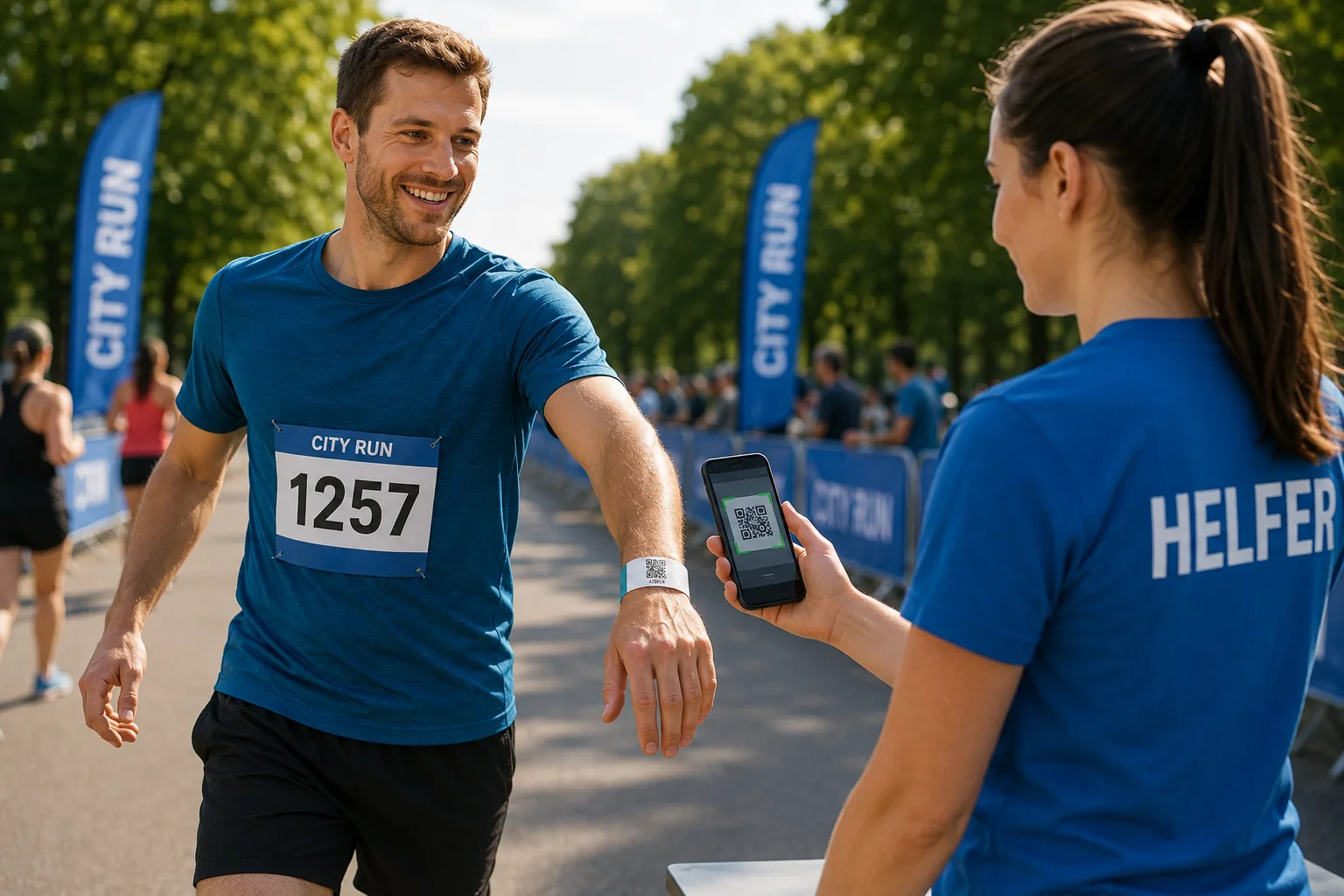
QR LapScan turns smartphones into mobile capture devices: runners get an individual QR code, helpers scan it on the course, and the recorded laps are ready for evaluation afterwards.
Four steps from preparation to evaluation.
Runners are added in the portal. A unique QR code is assigned automatically.
The assigned QR code is printed, for example on a wristband. Alternatively, already prepared QR codes can be used. The code is then linked to the runner through the app together with the portal, for example at check-in on event day.
Helpers scan the QR code with the app whenever a runner passes by. Every valid scan counts one lap, repeated scans within a short time are only counted once. Data is transmitted to the portal in near real time, bundled after a certain number of scans to save data.
The app already shows an overview on site, for example total laps and number of runners. In the portal you can additionally configure which data is displayed there.

QR LapScan uses what's already there and keeps lap tracking simple for helpers.
The tool for mobile data capture on site. Lap tracking is its main use case.
Usable in the demo right nowView app overview →Supports preparing and managing the event, and takes technical complexity off the organizer's plate.
In preparation for the first pilot eventsLearn more →
Many charity and sponsored runs still count laps with rubber bands. It works, but it's no longer up to date and hard to evaluate. Professional RFID systems are powerful but often too expensive for smaller events. QR LapScan closes that gap: scan a QR code, save the lap, and get a traceable result.

Disposable paper-style control bands, often made of Tyvek, can be printed with prepared QR codes yourself.
Silicone bands with a slide-on QR element work well across multiple events, as long as they're actually collected and reused.
Short content, large enough codes and good contrast noticeably improve recognition and speed.